A Guide to Skin Whitening Treatment

Skin whitening treatment is commonly searched for by people who want brighter, clearer, and more even-looking skin. However, it is important to understand that modern dermatology focuses more on safe skin brightening treatment and skin lightening treatment rather than changing natural skin colour completely. The right treatment can help reduce pigmentation, tanning, dullness, acne marks, and uneven skin tone when planned by a qualified skin expert.
For people looking for the best skin clinic in Bangalore, choosing a safe and medically guided approach is important. Skin type, pigmentation depth, lifestyle, sun exposure, and sensitivity all affect the treatment plan and results.
What is Skin Whitening Treatment?
Skin whitening treatment refers to professional procedures used to reduce excess pigmentation and improve overall skin brightness. These treatments may target melanin buildup, dark spots, tanning, sun damage, and dull skin. A better term is skin brightening treatment, because most procedures aim to restore an even tone and healthy glow rather than permanently changing natural complexion.
How Skin Whitening Treatments Work

These treatments work by exfoliating damaged surface cells, reducing excess melanin activity, or improving skin renewal. Some procedures, such as chemical peels, remove dead skin buildup. Laser treatments target pigmentation deeper in the skin. Certain medical treatments may support antioxidant activity, but their results can vary from person to person.
Who Should Consider These Treatments
These treatments may be suitable for people with pigmentation, melasma, sun tan, dull skin, acne marks, uneven tone, or age-related spots. A dermatologist's consultation is important before starting, especially for people with sensitive skin, active acne, pregnancy, or existing skin conditions.
Clinical Experience at Ossom Aesthetic Clinic
Our dermatologists commonly treat pigmentation concerns such as melasma, suntan, post-inflammatory hyperpigmentation, and acne marks. Based on clinical observations, treatment outcomes vary depending on pigmentation depth, skin type, and sun exposure habits.
Types of Skin Whitening Treatments
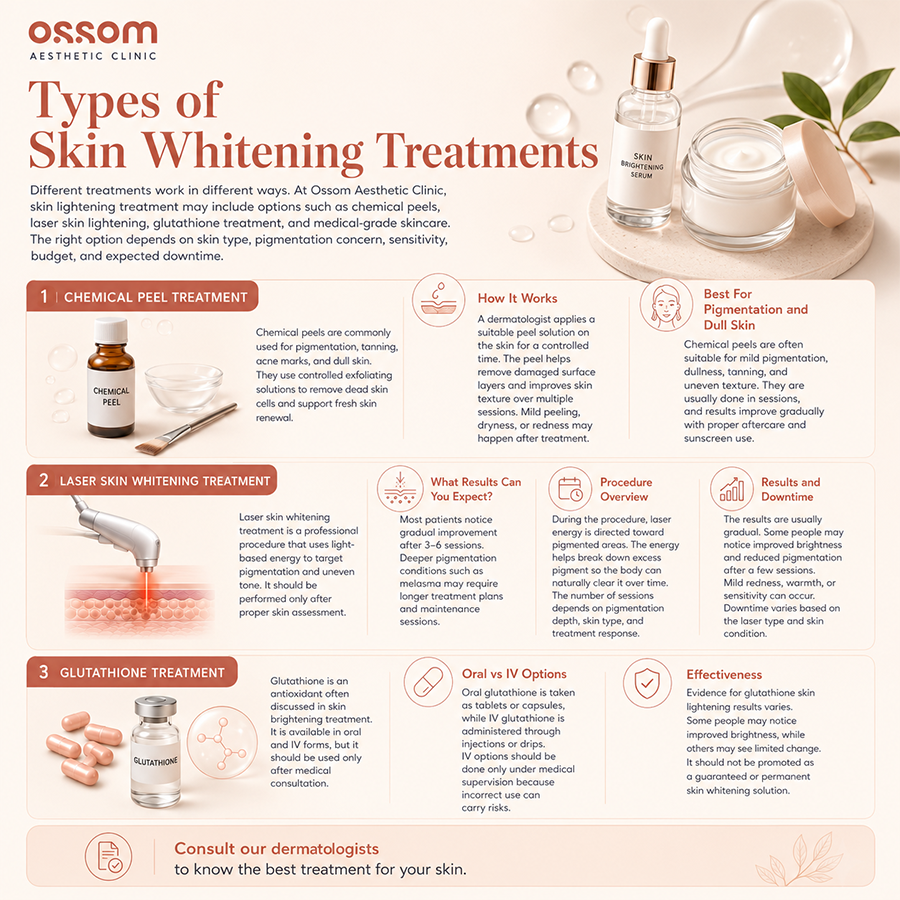
Different treatments work in different ways. At Ossom Aesthetic Clinic, skin lightening treatment may include options such as chemical peels, laser skin lightening, glutathione treatment, and medical-grade skincare. The right option depends on skin type, pigmentation concern, sensitivity, budget, and expected downtime.
Chemical Peel Treatment
Chemical peels are commonly used for pigmentation, tanning, acne marks, and dull skin. They use controlled exfoliating solutions to remove dead skin cells and support fresh skin renewal.
How It Works
A dermatologist applies a suitable peel solution on the skin for a controlled time. The peel helps remove damaged surface layers and improves skin texture over multiple sessions. Mild peeling, dryness, or redness may happen after treatment.
Best For Pigmentation and Dull Skin
Chemical peels are often suitable for mild pigmentation, dullness, tanning, and uneven texture. They are usually done in sessions, and results improve gradually with proper aftercare and sunscreen use.
Laser Skin Whitening Treatment
Laser skin whitening treatment is a professional procedure that uses light-based energy to target pigmentation and uneven tone. It should be performed only after proper skin assessment.
What Results Can You Expect?
Most patients notice gradual improvement after 3–6 sessions. Deeper pigmentation conditions such as melasma may require longer treatment plans and maintenance sessions.
Procedure Overview
During the procedure, laser energy is directed toward pigmented areas. The energy helps break down excess pigment so the body can naturally clear it over time. The number of sessions depends on pigmentation depth, skin type, and treatment response.
Results and Downtime
The results are usually gradual. Some people may notice improved brightness and reduced pigmentation after a few sessions. Mild redness, warmth, or sensitivity can occur. Downtime varies based on the laser type and skin condition.
Glutathione Treatment
Glutathione is an antioxidant often discussed in skin brightening treatment. It is available in oral and IV forms, but it should be used only after medical consultation.
Oral vs IV Options
Oral glutathione is taken as tablets or capsules, while IV glutathione is administered through injections or drips. IV options should be done only under medical supervision because incorrect use can carry risks.
Effectiveness
Evidence for glutathione skin lightening results varies. Some people may notice improved brightness, while others may see limited change. It should not be promoted as a guaranteed or permanent skin whitening solution.
Permanent Skin Whitening Treatment – Myth or Reality?
Many people search for permanent skin whitening treatment, but this claim should be treated carefully. Skin colour is mainly influenced by genetics and melanin levels.
Can Skin Tone Be Permanently Changed?
Natural skin tone cannot be permanently changed in a safe and predictable way. Treatments can reduce pigmentation, tanning, and dullness, but they do not permanently alter genetic complexion.
Maintenance Required After Treatment
Maintenance is essential. Sun protection, skincare routine, hydration, and follow-up sessions may be needed to maintain results. Without sunscreen, pigmentation and tanning can return.
Benefits of Skin Whitening Treatments

When done correctly, skin brightening treatment can improve visible skin concerns and boost confidence.
Reduction in Pigmentation
Treatments can help reduce dark spots, tanning, melasma patches, acne marks, and sun-related pigmentation.
Brighter and Even Skin Tone
A good treatment plan can improve overall brightness and make the skin tone look more even and refreshed.
Improved Skin Texture
Procedures like peels and lasers may also improve roughness, clogged pores, and dull surface buildup, giving the skin a smoother appearance.
Side Effects and Risks
Every aesthetic treatment has possible side effects. Safety depends on skin evaluation, treatment selection, technology, and aftercare.
Common Side Effects
Common side effects may include redness, dryness, mild peeling, irritation, temporary sensitivity, or slight swelling. These usually reduce with proper care.
Risks of Improper Treatment
Wrong treatment settings, harsh products, or unqualified procedures can cause burns, post-inflammatory pigmentation, irritation, or uneven results.
Importance of Professional Consultation
A qualified dermatologist or trained skin expert can assess your skin type and suggest the safest option. This is especially important for deeper pigmentation, sensitive skin, or recurring dark patches.
Cost of Skin Whitening Treatment in Bangalore
The cost of skin brightening treatment in Bangalore varies based on the treatment type, clinic location, technology, and number of sessions.
Average Price Range by Treatment Type
Chemical peels may start from a lower price range per session, while laser treatments usually cost more because they involve advanced technology. Glutathione treatment pricing varies based on oral or IV options and medical supervision.
Factors Affecting Cost
Main cost factors include clinic reputation, dermatologist expertise, treatment area, pigmentation severity, number of sessions, technology used, and aftercare products.
Pre-Treatment and Aftercare Tips
Good preparation and aftercare can improve comfort and reduce the risk of side effects.
How to Prepare Your Skin
Avoid harsh scrubs, strong actives, waxing, or unnecessary home remedies before treatment. Inform your doctor about allergies, medication, acne, or previous skin reactions.
Post-Treatment Skincare Routine
Use a gentle cleanser, soothing moisturizer, and dermatologist-recommended products. Avoid picking, scrubbing, or applying strong actives until the skin recovers.
Importance of Sunscreen
Sunscreen is essential after any skin lightening treatment. Use broad-spectrum SPF 30 or above daily. Reapply when outdoors, sweating, or exposed to direct sunlight.
Natural Alternatives to Skin Whitening Treatments
Natural methods cannot change skin colour permanently, but they can help improve dullness and support a healthy glow.
Home Remedies for Brighter Skin
Simple habits like hydration, good sleep, balanced diet, and gentle cleansing can improve skin freshness. Avoid harsh DIY remedies like lemon juice, baking soda, or toothpaste, as they can irritate the skin.
Skincare Routine for Natural Glow
A basic routine with cleanser, moisturizer, sunscreen, and suitable actives like vitamin C, niacinamide, or mild exfoliants can support brighter-looking skin over time.
How to Choose the Right Treatment for Your Skin Type
The same treatment may not suit everyone. Skin type matters.
Oily Skin
Oily skin may benefit from peels or ingredients that manage clogged pores and acne marks. Non-comedogenic skincare is important.
Dry Skin
Dry skin needs barrier support before treatment. Hydrating products and gentle procedures are preferred to avoid irritation.
Sensitive Skin
Sensitive skin requires extra caution. Mild treatments, patch testing, and professional supervision are recommended.
Common Mistakes to Avoid
Avoid rushing into treatment without proper guidance.
Overuse of Treatments
Too many sessions or strong products can damage the skin barrier and cause irritation.
Ignoring Skin Type
A treatment that works for oily skin may not suit sensitive or dry skin. Personalization is important.
Skipping Dermatologist Advice
Do not rely only on online suggestions. A dermatologist can identify whether pigmentation is due to tanning, melasma, acne marks, or another cause.
Dermatologist Tips
- Always use SPF 30+ sunscreen after treatment.
- Avoid self-medicating with whitening creams.
- Follow post-treatment instructions carefully.
- Do not expect permanent skin colour change.
Why Trust Ossom Aesthetic Clinic?
- Experienced dermatologists
- Personalized treatment plans
- Advanced laser technologies
- Evidence-based treatment protocols
- Focus on patient safety and realistic outcomes
Conclusion
Skin whitening treatment should be approached as a safe skin brightening treatment, not as a promise to permanently change natural complexion. Chemical peels, laser skin whitening treatment, and medically guided options may help reduce pigmentation, dullness, and uneven tone.
For people searching for skin brightening treatment or the best skin clinic in Bangalore, professional consultation is the safest first step. The right treatment plan, consistent aftercare, and daily sunscreen can help achieve healthier, brighter, and more even-looking skin.
FAQs