Best Skincare Routine for Oily Skin: Step-by-Step Guide
In our clinical experience, managing oily skin is often more about consistency than using multiple products. Patients who follow a simple, dermatologist-recommended routine and avoid over-cleansing or excessive exfoliation generally achieve better long-term skin balance than those who frequently switch products or use harsh treatments.
This dermatologist-reviewed guide explains the best skincare routine for oily skin, which ingredients to choose, what to avoid, and when to consult a skin specialist at Ossom Aesthetic Clinic in Bengaluru.
Quick Answer: Best Routine for Oily Skin
Morning routine:
- Gentle gel-based cleanser
- Niacinamide serum or lightweight hydrating serum
- Oil-free, non-comedogenic moisturizer
- Broad-spectrum SPF 30+ sunscreen
Night routine:
- Gentle cleanser
- Salicylic acid serum 2–3 nights a week, if tolerated
- Lightweight moisturizer
Weekly care:
Use a clay mask once a week and exfoliate only 1–2 times weekly. Avoid harsh scrubs, alcohol-heavy toners, and over-washing.
What is Oily Skin?
Oily skin happens when the sebaceous glands produce more sebum than needed. Sebum is the skin's natural oil. It protects the skin, but too much of it can lead to a greasy appearance, enlarged pores, blackheads, whiteheads, and acne. For people searching for skin clinic in Bangalore, oily skin management is especially important because heat, humidity, pollution, and frequent sweating can increase oil buildup on the skin.
Key Signs of Oily Skin
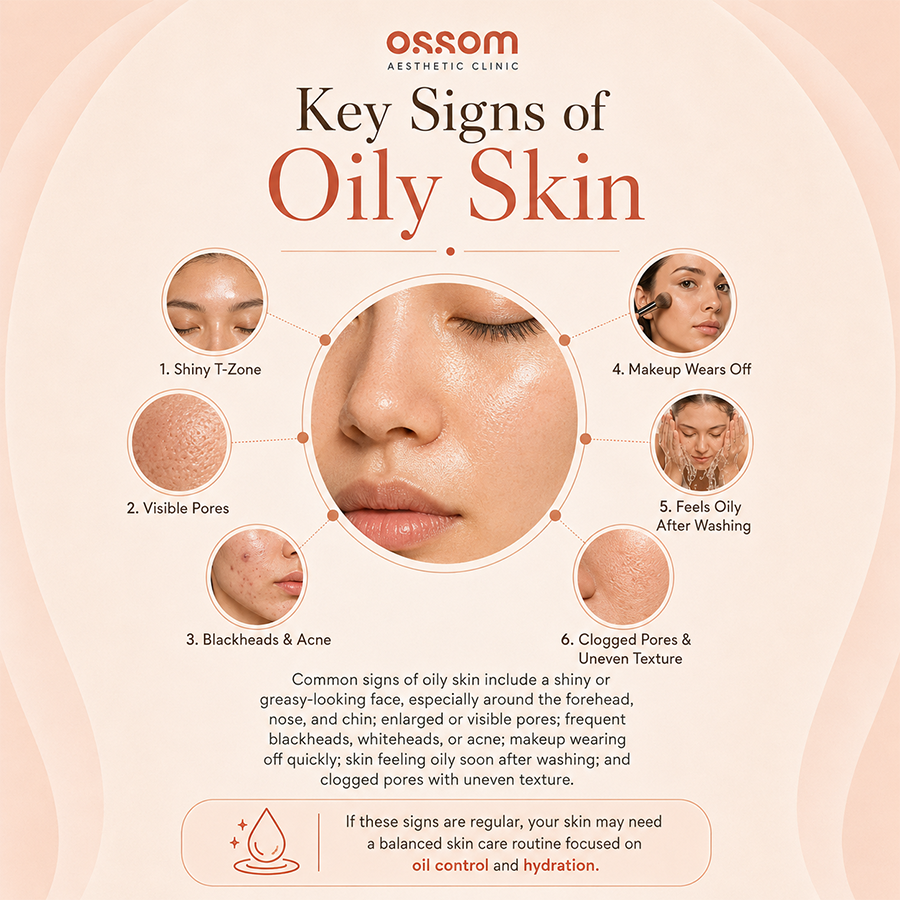
Common signs of oily skin include:
- Shiny or greasy-looking face, especially around the forehead, nose, and chin
- Enlarged or visible pores
- Frequent blackheads, whiteheads, or acne
- Makeup wearing off quickly
- Skin feeling oily soon after washing
- Clogged pores and uneven texture
If these signs are regular, your skin may need a balanced skin care routine focused on oil control and hydration.
Common Causes: Climate, Hormones, Diet
Oily skin can happen due to several reasons. Genetics is one of the main causes. If oily skin runs in the family, you may also experience it. Climate also plays a major role. Hot and humid weather can increase sweat and oiliness. Hormonal changes during puberty, periods, pregnancy, or stress may also trigger excess sebum. Diet, lack of sleep, harsh products, and over-washing can further disturb the skin barrier.
Clinical Experience at Ossom Aesthetic Clinic
Oily skin is one of the most common concerns seen at our clinic. Many patients struggle with excess shine, enlarged pores, and recurring acne due to Bangalore's humid climate and pollution levels.
Why Oily Skin Needs a Proper Routine
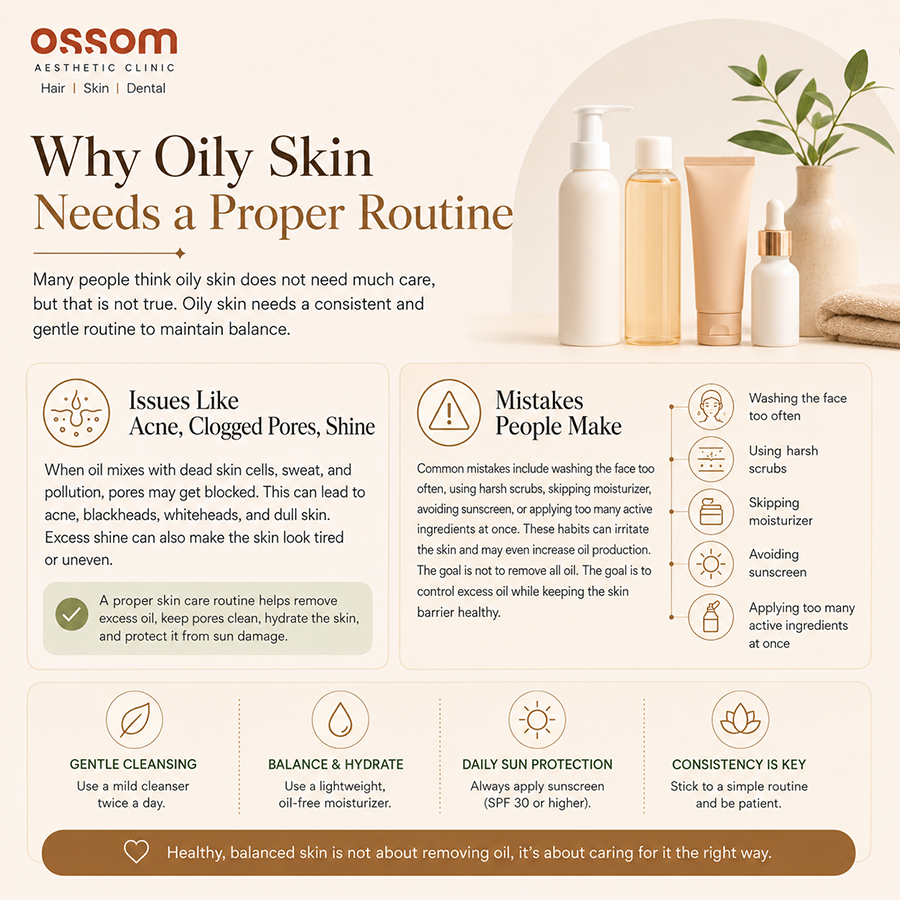
Many people think oily skin does not need much care, but that is not true. Oily skin needs a consistent and gentle routine to maintain balance.
Issues Like Acne, Clogged Pores, Shine
When oil mixes with dead skin cells, sweat, and pollution, pores may get blocked. This can lead to acne, blackheads, whiteheads, and dull skin. Excess shine can also make the skin look tired or uneven. A proper skin care routine helps remove excess oil, keep pores clean, hydrate the skin, and protect it from sun damage.
Mistakes People Make
Common mistakes include washing the face too often, using harsh scrubs, skipping moisturizer, avoiding sunscreen, or applying too many active ingredients at once. These habits can irritate the skin and may even increase oil production. The goal is not to remove all oil. The goal is to control excess oil while keeping the skin barrier healthy.
Step-by-Step Skincare Routine for Oily Skin
A simple daily routine works better than using too many products. Follow these basic skin care steps every day.
Step 1: Cleanser — Gel Based Face Wash
Start with a gentle gel-based cleanser. It helps remove excess oil, sweat, and dirt without making the skin too dry. For oily skin, avoid heavy cream cleansers or harsh soaps. Wash your face twice a day: once in the morning and once at night. After workouts or heavy sweating, rinse your face gently.
Step 2: Toner — Alcohol-Free
An alcohol-free toner can help refresh the skin and prepare it for the next steps. Choose a toner with soothing or pore-care ingredients. Avoid toners that sting, burn, or make the skin feel tight. Toner is optional, but it can be useful for oily skin when chosen correctly.
Step 3: Serum — Choose Based on Your Concern
For excess oil and visible pores, niacinamide is a good beginner-friendly option. It supports the skin barrier and helps the skin look more balanced. For blackheads, whiteheads, and clogged pores, salicylic acid can be helpful because it supports exfoliation inside oily pores. Start with 2–3 nights a week instead of using it daily. Do not combine multiple strong actives at once. If you have active acne, painful pimples, sensitive skin, pregnancy-related skin changes, or irritation, consult a dermatologist before using exfoliating acids.
Expert Recommendation
For beginners, niacinamide is usually a safer starting ingredient than strong exfoliating acids. Introduce one active ingredient at a time and monitor your skin's response.
Step 4: Moisturizer — Oil-Free and Lightweight
Oily skin still needs moisturizer. Skipping it can make the skin dehydrated, which may trigger more oil production. Choose an oil-free, gel-based, or lightweight moisturizer. Look for non-comedogenic formulas that hydrate without clogging pores. A good moisturizer keeps the skin soft, balanced, and comfortable.
Step 5: Sunscreen — SPF 30+
Sunscreen is a must in every skin care routine. Use a broad-spectrum sunscreen with SPF 30 or above during the day. For oily skin, choose a lightweight, matte-finish, gel-based, or non-comedogenic sunscreen. Apply sunscreen every morning and reapply when outdoors, sweating, or exposed to sunlight for long hours.
Weekly Skincare Add-ons
Weekly care can support your routine, but it should not be overdone.
Clay Masks for Oil Control
Clay masks can help absorb excess oil and reduce shine. Use them once a week if your skin feels very oily. Avoid using clay masks daily, as they may dry out the skin.
Exfoliation 1–2 Times a Week
Exfoliation removes dead skin cells and helps prevent clogged pores. For oily skin, chemical exfoliants such as salicylic acid are usually a better choice than harsh physical scrubs. Limit exfoliation to 1–2 times a week, since overdoing it can lead to redness, burning, dryness, and breakouts.
Expected Timeline for Results
Most people begin noticing reduced oiliness and improved skin texture within 4–8 weeks of following a consistent skincare routine. Results vary depending on hormones, genetics, and lifestyle factors.
Ingredients That Work Best for Oily Skin
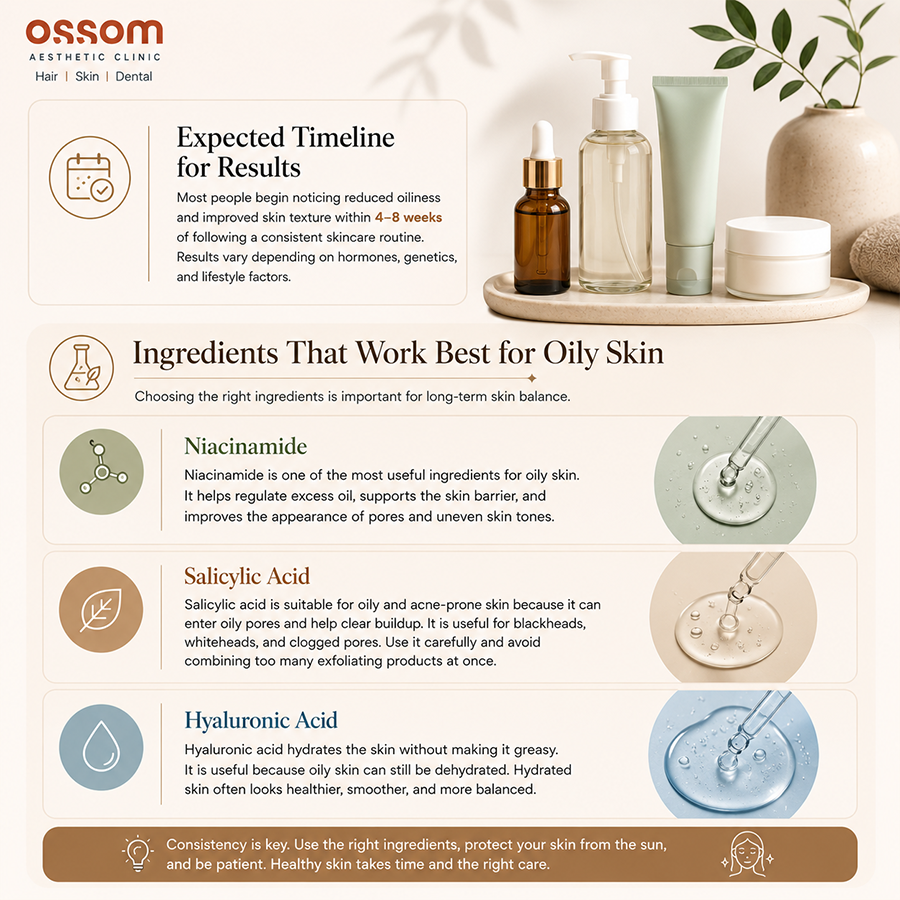
Choosing the right ingredients is important for long-term skin balance.
Niacinamide
Niacinamide is one of the most useful ingredients for oily skin. It helps regulate excess oil, supports the skin barrier, and improves the appearance of pores and uneven skin tones.
Salicylic Acid
Salicylic acid is suitable for oily and acne-prone skin because it can enter oily pores and help clear buildup. It is useful for blackheads, whiteheads, and clogged pores. Use it carefully and avoid combining too many exfoliating products at once.
Hyaluronic Acid
Hyaluronic acid hydrates the skin without making it greasy. It is useful because oily skin can still be dehydrated. Hydrated skin often looks healthier, smoother, and more balanced.
Ingredients to Avoid
Not every product suits oily skin. Some ingredients can feel heavy or irritated.
Heavy Oils
Avoid thick, heavy oils if they clog your pores or make your skin greasy. Products with heavy textures may worsen blackheads and breakouts for some people.
Alcohol-Heavy Products
Alcohol-heavy products may give a temporary matte feel, but they can dry and irritate the skin. This may disturb the skin barrier and cause more oiliness over time.
Common Mistakes to Avoid
Small routine mistakes can affect your skin more than you think.
Over-Washing Face
Washing your face too many times a day can strip natural oils and irritate the skin. Stick to twice daily cleansing unless you remove sweat after exercise.
Skipping Moisturizer
Many oily skin people skip moisturizers, thinking it will make the skin greasier. Lightweight moisturizers help maintain balance and reduce dehydration.
Using Harsh Products
Avoid harsh scrubs, strong soaps, and too many active ingredients. Gentle and consistent care is safer and more effective for oily skin.
When Should You Consult a Dermatologist for Oily Skin?
You should consult a dermatologist if oily skin is accompanied by painful acne, recurring breakouts, acne scar, pigmentation, redness, burning, or products that keep irritating your skin. You should also seek help if acne continues for more than a few weeks despite a simple routine.
At Ossom Aesthetic Clinic, acne treatment is dermatologist-led and customised based on skin type, acne severity, and underlying causes. A professional skin analysis can help identify whether your concern is simple oiliness, acne-prone skin, hormonal acne, clogged pores, or post-acne marks.
Dermatologist Tips
- Do not wash your face more than twice daily.
- Never skip moisturizer.
- Use sunscreen every day.
- Avoid trying multiple active ingredients simultaneously.
Why Trust Ossom Aesthetic Clinic?
- Dermatologist-led skin consultations
- Personalized skincare recommendations
- Evidence-based treatment plans
- Advanced acne and pigmentation treatments
- Focus on long-term skin health
Conclusion
Oily skin needs balance, not harsh treatment. A good skin care routine should include a gentle cleanser, alcohol-free toner if needed, suitable serum, lightweight moisturizer, and SPF 30+ sunscreen.
For people looking for skin care in Bangalore, climate, pollution, and humidity can make oily skin more difficult to manage. Following the right skin care steps consistently can help reduce shine, clogged pores, and breakouts while keeping the skin healthy.
If oiliness, acne, or irritation continues despite a regular routine, it is better to consult a qualified skin care professional or dermatologist for a personalized treatment plan.
FAQs